Astromat News
Astromat Newsletter July 2026
July 10, 2026
Dear Astromat Newsletter Subscribers,
For those who are attending the Goldschmidt 2026 conference next week, we’d love to catch up with you at one of the scheduled events below! We will be at Booth 218 in the poster hall throughout the conference. Please stop by for a demo of our systems, or any questions you may have regarding access to astromaterials samples data, data management planning and publishing data at Astromat.
Workshop
- Toward Science-ready, AI-ready Geochemical Data (Sunday, 12 July, 10:00 - 17:00)
Presentations
- Toward Consistent, Comprehensive, and Meaningful Documentation of Analytical Methods in Geochemistry: The Data Repository Perspective (Monday, 13 July, 10:30; room 520CF, session 06-O1)
- Making Returned Sample Analytical Data Reusable: Metadata Curation in Astromat (Wednesday, 15 July, 17:00 - 19:00; room 516BCDE - 517, session 01d-P1)
Meeting
- Editors’ Roundtable on Publication of Geochemical Data (Tuesday, 14 July, 13:00 - 14:00; room 525AB)
Town Hall
- Where to next for publishing geochemical data and analytical protocols (Thursday, 16 July 2026, 13:00 - 14:00; room 520BE)
Poster Hall Booth
- Open Data in Geochemistry, Booth: 218. This exhibit booth will feature multiple data systems that provide services for open geochemical data: the Astromaterials Data System, the AuScope Geochemistry Network AGN, EarthChem, and GEOROC.
Thank you to all of you who registered for the Astromat workshop at MetSoc 2026. The workshop is at capacity and registration has closed. If you are interested to be placed on a waiting list, please contact us at info@astromat.org.
Astromat is part of an effort by the OneGeochemistry initiative to make the reporting of protocols for a wide range of analytical techniques more consistent, meaningful, and machine-readable. A new page on our web site describes the development of Technique-Aligned Protocol Profiles (TAPP). We are looking for experts (you!) to review and improve the TAPPs. Sign up for an Expert Working Group that fits your expertise. Participants in TAPP Expert WGs will become co-authors of a publication about the TAPPs.
Best,
Astromat Team
Astromat Workshop at MetSoc 2026: Data Management Bootcamp for Astromaterials Researchers
April 10, 2026
Thanks to all who participated in the half-day workshop in Frankfurt inside the Senckenberg Museum!
It was great to see everyone and we hope the presentations and discussions were useful. The workshop presentations by Kerstin Lehnert and Ruolin Deng have now been published and available for download at the citation below.
Lehnert, K., Deng, R., 2026. Presentation from the Astromat Workshop at MetSoc 2026: Data Management Bootcamp for Astromaterials Researchers, Version 1.0. Astromaterials Data Archive. https://doi.org/10.60707/5zk1-dr84.
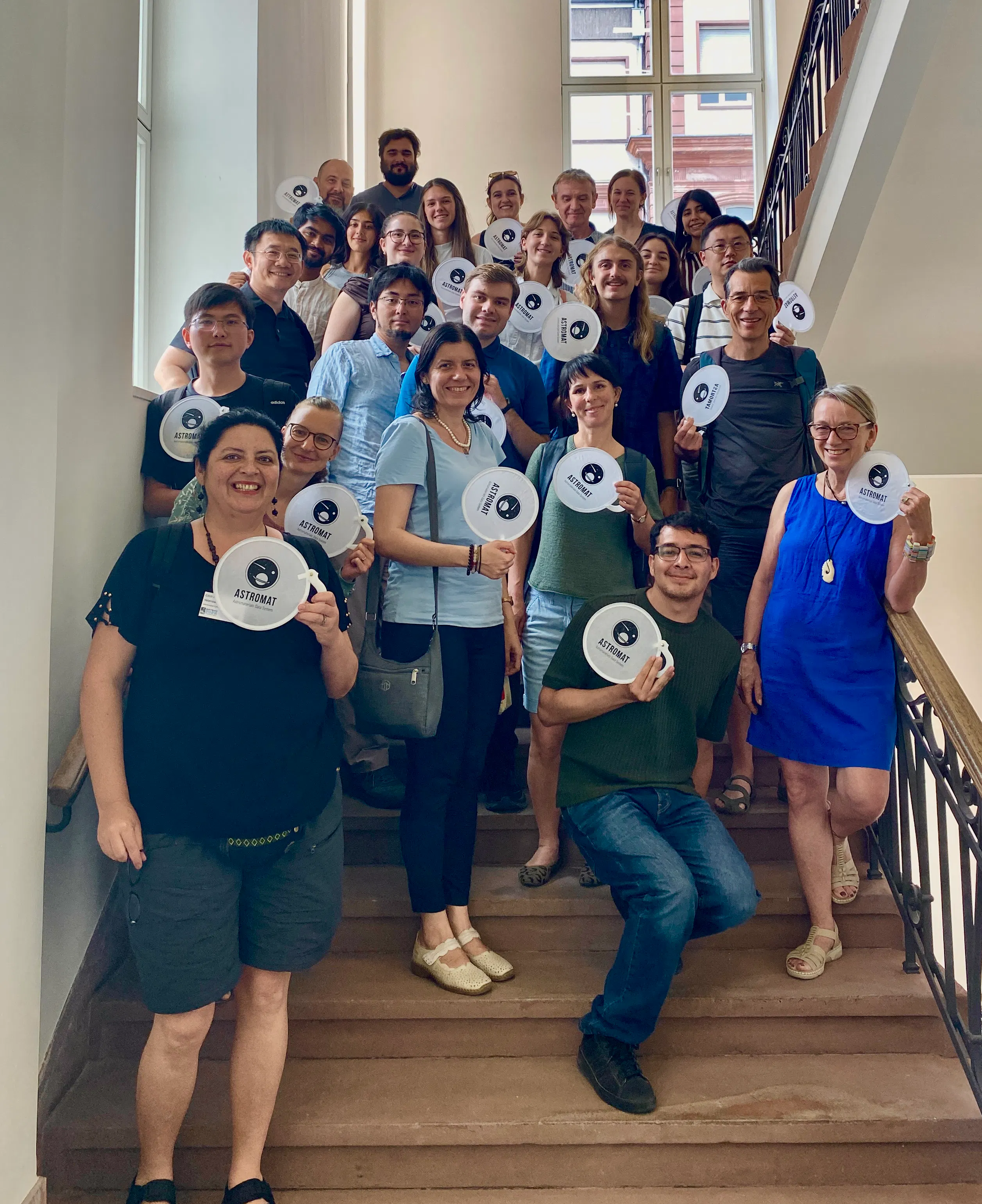
The Astromaterials Data System, NASA’s designated archive for laboratory analytical data of returned samples, hosted a workshop in conjunction with the 88th Annual Meteoritical Society Meeting on August 9, 2026 in Frankfurt, Germany.
This 2-part, free workshop aimed to help researchers navigate the landscape of astromaterials sample data, from finding and accessing lab analytical data, to generating Open Science Data Management Plans (OSDMPs) for funding proposals, to documenting their own lab analytical data following community best practices, to depositing and archiving data in compliance with funders’ and journals’ policies. We specifically aim at early-career researchers to help them develop skills in digital cosmochemistry and make them aware of the resources available to support their data management.
Data Management Bootcamp for Astromaterials Researchers:
01. Data Management 101 for astromaterials samples (1:00 PM – 3:00 PM)
02. Method-specific documentation of analytical protocols (3:30 PM – 5:00 PM)
Details:
Sunday, 9 August 2026
- 12:30 Registration and Lunch
- 13:00-17:00 Workshop
Location:
Senckenberg Nature Museum
Arthur-von-Weinberg-Haus
Green Lecture Hall
Robert-Mayer-Straße 2
60325 Frankfurt am Main
Astromat Newsletter February 2026
February 13, 2026
Dear Astromat Newsletter Subscribers,
Here are the latest updates about the Astromaterials Data System. Please feel free to contact us with any questions at info@astromat.org.
Sign up for the Astromat Newsletter here.
Growing Content of Astromat
Over 3,800 datasets from the OSIRIS-REx Sample Analysis have been archived in the Astromat Data Archive (ADA) so far. Ca. 40 datasets were submitted to the AstroRepo over the past year containing mostly data for Apollo samples (including ANGSA) and meteorites. The Astromat Synthesis has grown to 2.5 million analytical measurements.
Connect with Astromat at LPSC 2026
Please stop by the Astromat booth at the LPSC 2026. We will be in the poster hall throughout the conference. We hope that our booth will serve as a meeting point during the week and we encourage you to come find us for any questions you may have regarding access to astromaterials samples data, data management planning, publishing data at Astromat, and more. We also look forward to getting your feedback on the Astromat services and how we can improve to better support your research.
New Astromat Data Submission Interface Launched
Astromat has launched a new data submission interface as part of an effort to consolidate and modernize our archiving systems. The updated platform supports a more streamlined curation and review process, helping submitted datasets move more efficiently toward approval and publication. This initial release establishes a unified framework for managing sample and analytical metadata and will continue to evolve through community feedback. We welcome your input as we refine and improve the submission experience.
Best,
Astromat Team
AstroSearch v4 Release Notes
March 31, 2025
AstroSearch v4.0 – Release Date: March 2025
The Astromat Synthesis Search Application (AstroSearch) v4 has been migrated and integrated into a unified repository that houses multiple shared components. It now features a fresh interface, enhanced filters, instant results, and effortless exports with new options to customize outputs. Key changes are highlighted below:
Improvements of major functionalities
Configuration
- Improved query state management by adding NUQs library
- Modified schema to align with default API results and improved request functions for results
- Enhanced translation for all public text (i18n)
Search Results
- Updated datagrid table (MUI) for improved data organization for user experience;
- Included user-enabled contextual text bubble (tooltip) added for greater information on chemical variable value cells;
- Enriched customization features for user preference including custom pagination, custom table footer, custom export action, and more;
Exporting Search Results
- Streamlined user actions by enabling modal screens for interacting with data and metadata selection, chemical variable information, pre-export information, and data-collection;
Improved Filters
- Enriched the user experience for basic and advanced filters;
- Enabled multi-dimensional search query to yield more dexterous results;
- Included input components for: multi-selection, text-input, and matrix selection;
Updates to API & Technical Components
- Updated API with new endpoints, updated vocabularies, page-related endpoints, and some refactoring to streamline indexing and exports of dynamoDB submissions;
- Added transformation functions and fetching to the export-service to aid in metadata and variable compilation;
- Applied changes to index schema to improve efficiency of the main index;
- Maintain known issues and support workarounds while pursuing permanent solutions in alignment with development roadmap.
Astromat Awarded CoreTrustSeal Certification
September 15, 2025

Astromat is proud to have achieved certification as a Trustworthy Data Repository from the CoreTrustSeal Standards and Certification Board.
The rigorous application and certification process provided an invaluable opportunity to strengthen our data repository by aligning with the standards and requirements of the CoreTrustSeal standards and requirements. We are honored to join a diverse and robust community of certified data repositories and remain committed to continually advancing the trustworthiness of our services in support of users worldwide. We extend our sincere gratitude to all Astromat team members and collaborators who contributed to this achievement.
CoreTrustSeal is an international, community-based, non-governmental, and non-profit organization that promotes sustainable and trustworthy data infrastructures. Established in 2013, CoreTrustSeal emerged from a collaborative effort between the Data Seal of Approval (DSA) and the World Data System of the International Science Council (WDS), under the umbrella of the Research Data Alliance (RDA). CoreTrustSeal’s certification requirements provide a comprehensive framework for assessing data repositories, covering critical areas such as technology and infrastructure, security, data management, continuity of services, and governance. For more information on CoreTrustSeal certification and its requirements, visit www.coretrustseal.org.